Tiger Shark
Galeocerdo cuvier
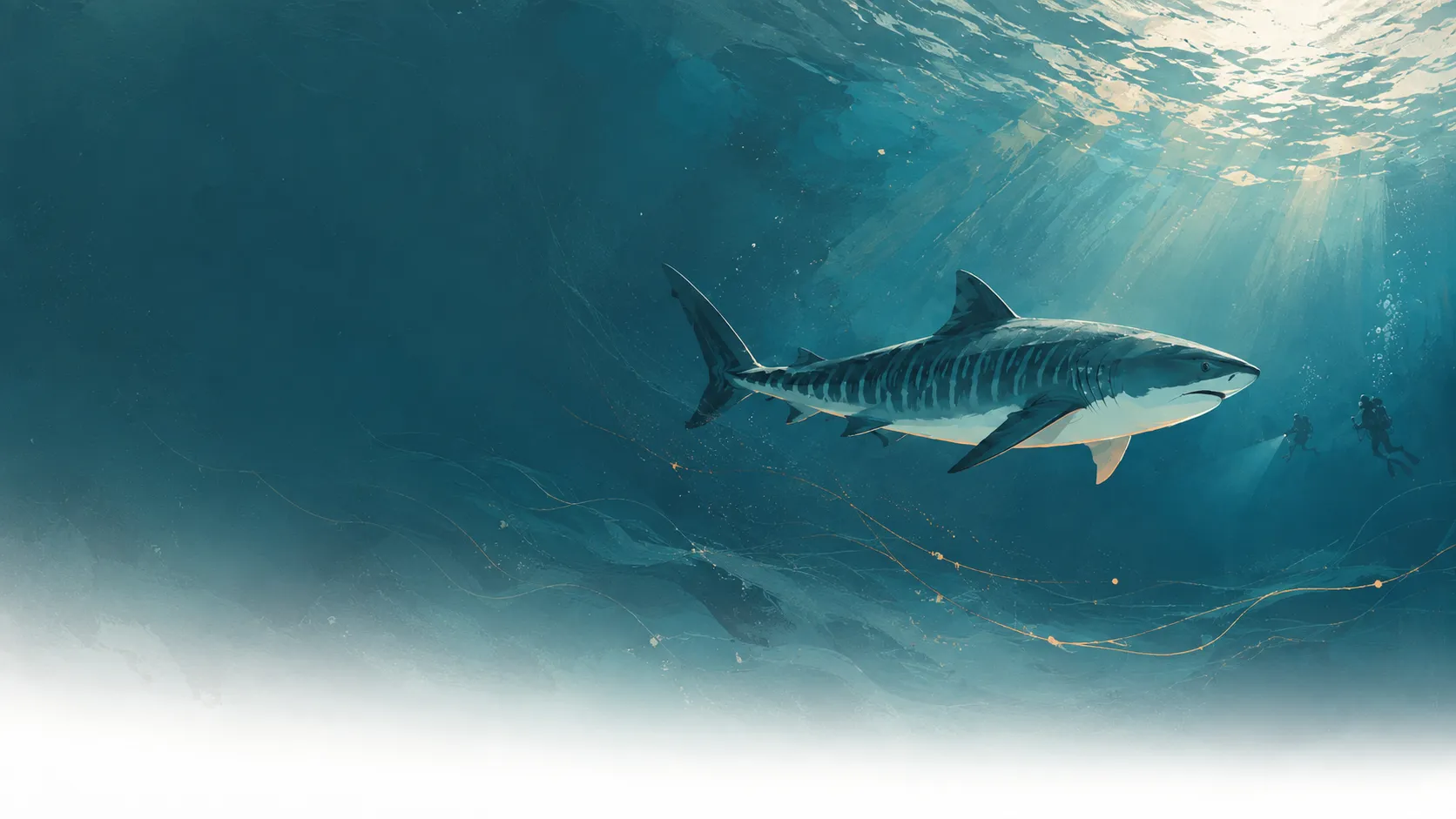
Powerful and adaptable, the tiger shark is known for its bold curiosity and wide range, from shallow reefs to open ocean.
Safety, seasons, cost, operators, research
The world's most consistent tiger shark diving, mapped by an independent guide that sells nothing — real numbers on safety, seasons, cost, and operators.
Start with the question you need answered first: safety, best time, budget, operator choice, or the research itself.
In brief
Fuvahmulah offers the world's most consistent tiger shark diving: researchers have identified 239 individual tiger sharks at a single shallow site, and sightings hold up every month of the year. This is the independent guide to diving it — we operate no dives, take no bookings, and earn no commissions.
Species compiled from field reports by ZuBlu diving guide, Pelagic Divers Fuvahmulah and Fuvahmulah Dive School.
8–10 m
Reef depth
Typical depth at the main encounter site
12 / 12
Months with sightings
Tiger sharks recorded every month of the year
239
Individuals logged
Identified by researchers, 2016–2023
1 : 4
Guide-to-diver ratio
The standard set by the operators' code of conduct
Short field moments, dive clips, and island atmosphere from the world's most consistent tiger shark site.
Why here, and nowhere else
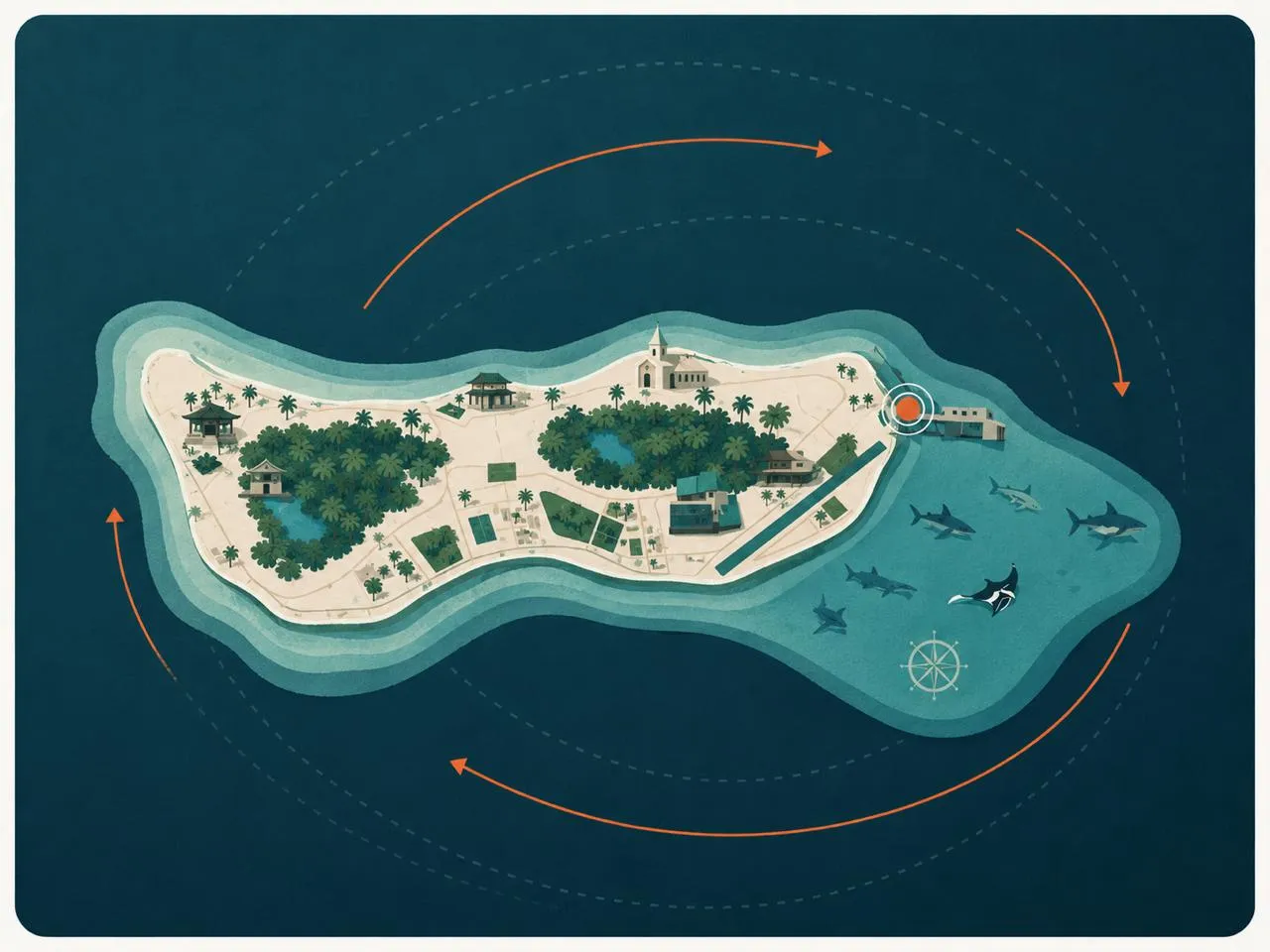
Fuvahmulah is the Maldives' only single-island atoll: no lagoon, no ring of reef — just one island whose sides drop fast into open ocean. Pelagic animals that elsewhere need a long boat ride pass within minutes of shore, and the dive site itself sits at the harbour mouth.
Decades of tuna-harbour history taught the sharks that this corner of the island is worth visiting. The research calls it a provisioning site; divers call it the most reliable big-shark dive in the world.
From the water
The evidence
Two 2024 studies turned Fuvahmulah's aggregation from a diver's rumour into the best-documented tiger shark population on record.
Read the research methodology239
Tiger sharks identified
A 2016–2023 photo-ID catalogue (Vossgaetter et al., 2024) tracks individuals by their unique markings.
View the research26 / 28
Pregnant females scanned
Underwater ultrasound found embryos in 26 of 28 adult females — the first gestational ground documented in the central Indian Ocean.
See the study77.8%
Resighted on later dives
Most identified sharks were seen again across the study, evidence of a resident population rather than passers-through.
Read field notesMost searched
Short answers here, with the full evidence and planning detail in the linked guides.
It is a high-consequence wildlife dive, but the established operators run it with a clear code of conduct, strict guide-to-diver ratios, and defined positioning rules. Start with the dedicated safety guide for the honest risk picture, not a marketing summary.
Tiger sharks are present year-round. The main variable is weather: roughly December to April usually brings calmer seas and cleaner visibility, while the wetter months can be rougher but quieter and sometimes better value.
Most divers should budget for a full package plus domestic flights, rental, and incidentals rather than looking only at the headline dive price. The costs guide breaks down complete trip budgeting in practical terms.
Open Water can be the minimum at some centres, but Advanced Open Water and stronger recent experience are often the more realistic threshold for a comfortable trip. The certification guide explains where the floor ends and readiness begins.
Stronger than almost any comparable shark-diving destination. Two 2024 papers documented 239 identified individuals and ultrasound-confirmed pregnancy in most scanned adult females, making this one of the best-studied tiger shark aggregations in the world.
Keep going by question
See the cleaner-weather window, rougher months, and how timing changes visibility, price, and trip feel.
Read the best-time guideStart with procedures, positioning, guide ratios, and what experience level feels realistic here.
Read the safety guideGo straight to the peer-reviewed findings, the 239 identified sharks, and the gestation-ground evidence.
Read the research guideWork from the real budget first, then move into itineraries, flights, and operator fit.
See the trip budgetPublished July 2026 · Updated August 2026 · Science verified 2026-07-11 · Prices checked 2026-07-15
Sources
Non-invasive methods characterise the world's largest tiger shark aggregation in Fuvahmulah, Maldives
Scientific Reports. Published . DOI: 10.1038/s41598-024-73079-3.
Open research source for Non-invasive methods characterise the world's largest tiger shark aggregation in Fuvahmulah, MaldivesIdentification of the first gestational ground for tiger sharks (Galeocerdo cuvier) in the Central Indian Ocean using a high-definition submersible ultrasound
Frontiers in Marine Science. Published . DOI: 10.3389/fmars.2024.1500176.
Open research source for Identification of the first gestational ground for tiger sharks (Galeocerdo cuvier) in the Central Indian Ocean using a high-definition submersible ultrasoundFuvahmulah Biosphere Reserve, Maldives
UNESCO Man and the Biosphere Programme. Published .
Open official source for Fuvahmulah Biosphere Reserve, Maldives